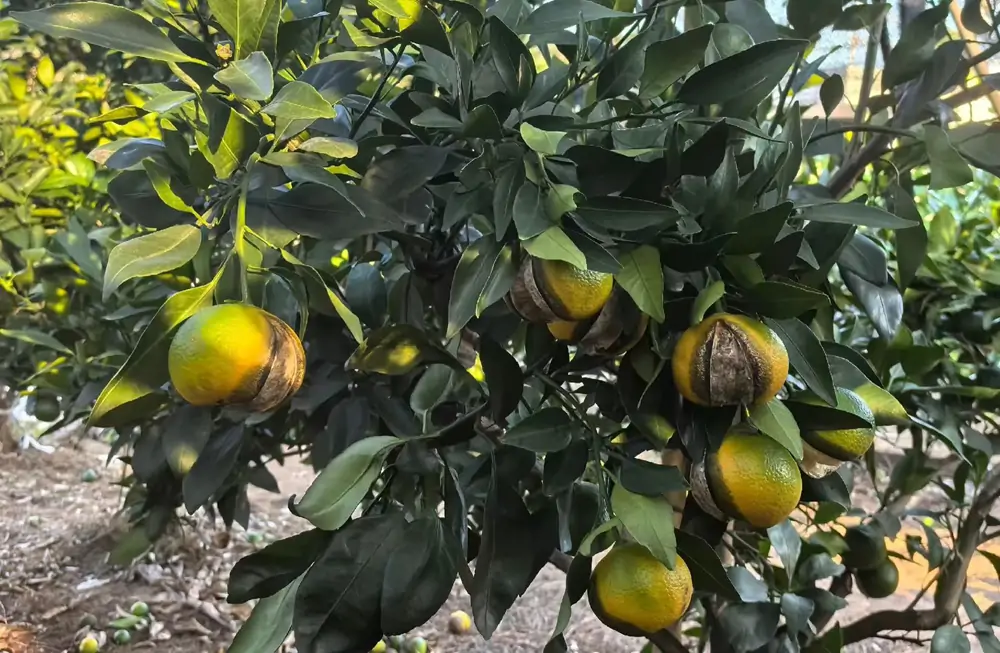
What Is Citrus Fruit Cracking?
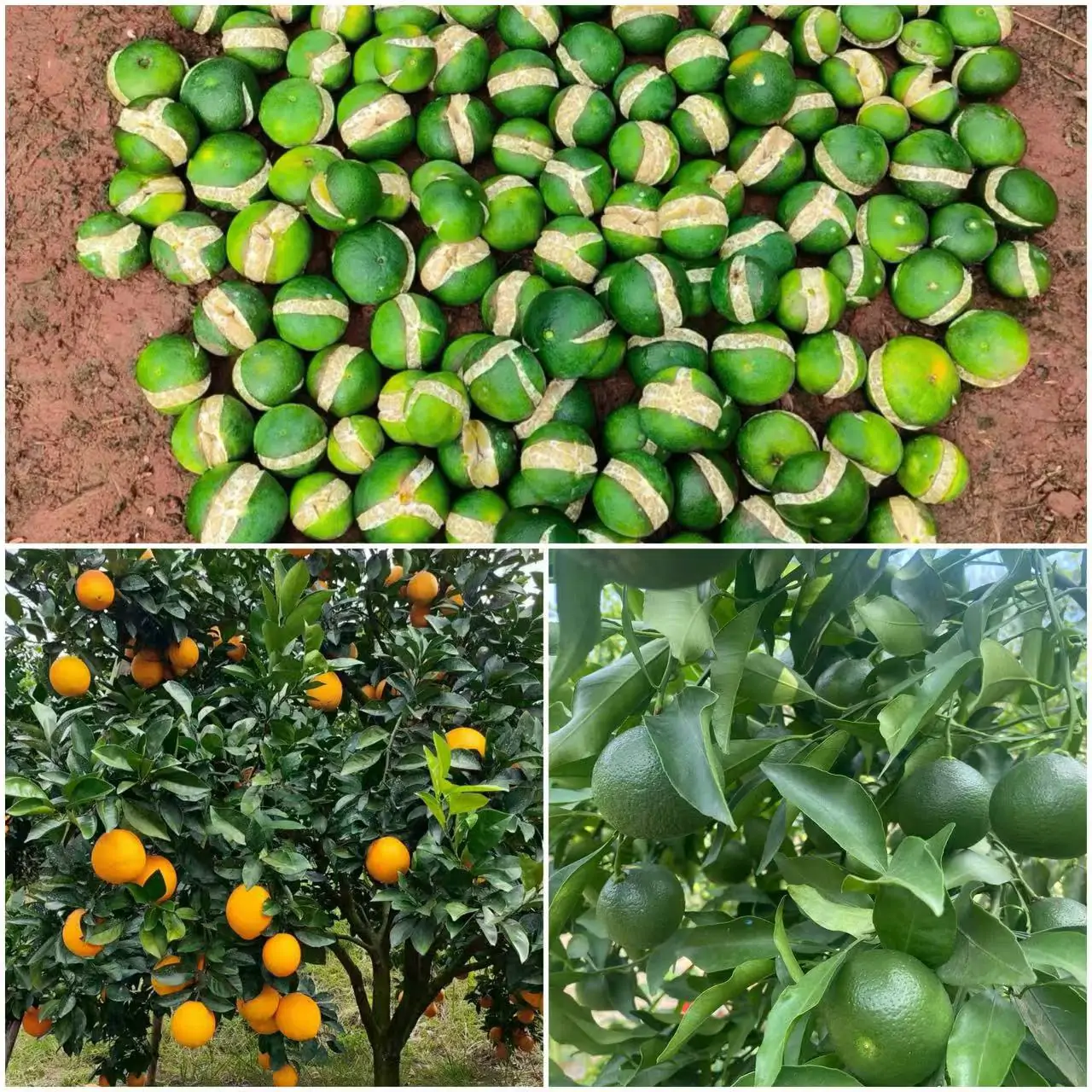
Citrus fruits are most susceptible to splitting during the fruit expansion and color-change stages. This phenomenon is a common issue across various citrus varieties, including loose-skinned mandarins, sweet oranges, and tangerines. Pre-harvest splitting not only renders the fruit commercially unviable but also increases its vulnerability to fungal infections and rot. If left unaddressed, this compromises fruit quality and reduces grower profits. The period from August to October marks the fruit expansion and coloring phases, during which splitting occurs to varying degrees, with September typically being the peak period. While the incidence rate is generally around 10%, it can exceed 50% under certain conditions. For citrus growers, understanding the underlying causes and implementing targeted preventive measures are crucial for citrus growers to improve fruit quality, minimize economic losses, and maximize marketable yield.
Citrus Fruit Craking Reason
Why Do Citrus Fruits Crack?
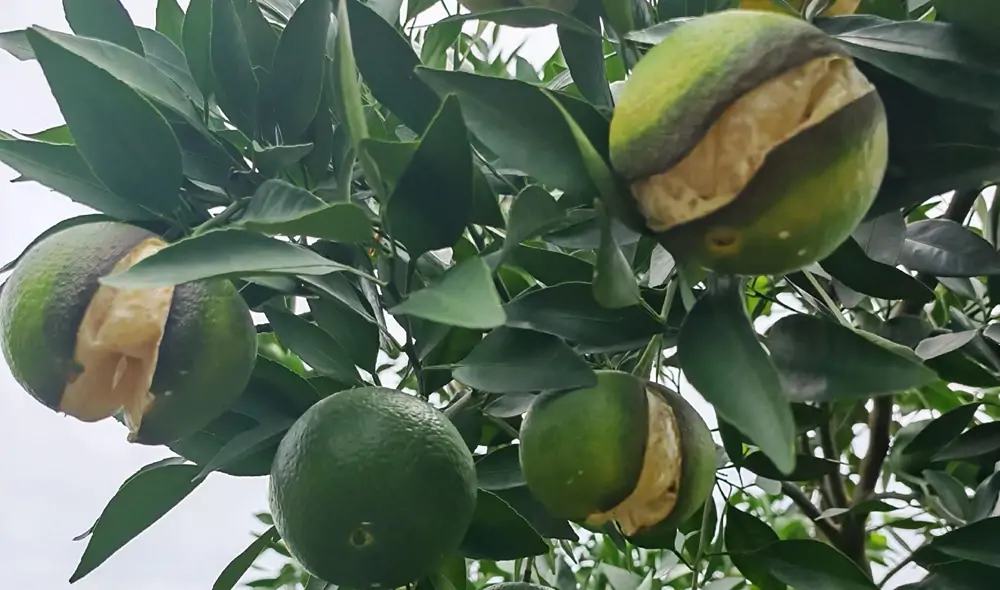
Sudden Changes in Soil Moisture
Excessive Irrigation
Heavy Rainfall Before Harvest
Nutrient Imbalance
Weak or Thin Fruit Peel
Rapid Fruit Growth
When citrus fruit grows extremely quickly, the pulp may expand faster than the peel.This difference in growth rate can increase tension within the fruit. If the peel lacks sufficient elasticity, cracks can develop.Maintaining stable water and nutrient conditions can help reduce excessive fluctuations in fruit growth. Improper Orchard Management:
For instance, completely clearing ground cover to reduce pest and disease reservoirs, excessive pruning, and the overuse of fast-release nitrogen fertilizers can severely compromise an orchard’s resilience to weather fluctuations. These practices make the fruit particularly susceptible to splitting during the alternating wet and dry spells typical of summer.
Pest and Disease Damage
Inadequate pest and disease management directly exacerbates fruit splitting. Pests such as citrus stink bugs and red spider mites, along with diseases like citrus canker, physically damage the fruit rind. This injury leads to localized moisture loss and reduces rind elasticity, significantly increasing the risk of cracking under internal pressure.
How to Prevent Citrus Fruit Cracking
Maintain Stable Soil Moisture
Improve Orchard Drainage
Apply Balanced Fertilization
Pay Attention to Calcium and Potassium Management
Use Organic Matter to Improve Soil Water Management
Use Mulching When Appropriate
Manage the Citrus Crop Load
Scientific Application of Plant Growth Regulators:
During prolonged dry spells or periods of drought followed by heavy rainfall, timely application of gibberellin can effectively reduce fruit cracking by stimulating peel cell growth and enhancing rind elasticity. However, precise dosage is critical, as peel thickness directly determines the commercial quality of Shatang mandarins. While an excessively thin peel is highly susceptible to cracking, an overly thick peel compromises the formation of the fruit’s characteristic granular texture. The optimal peel thickness should be strictly maintained between 1.4 and 2.0 millimeters.