
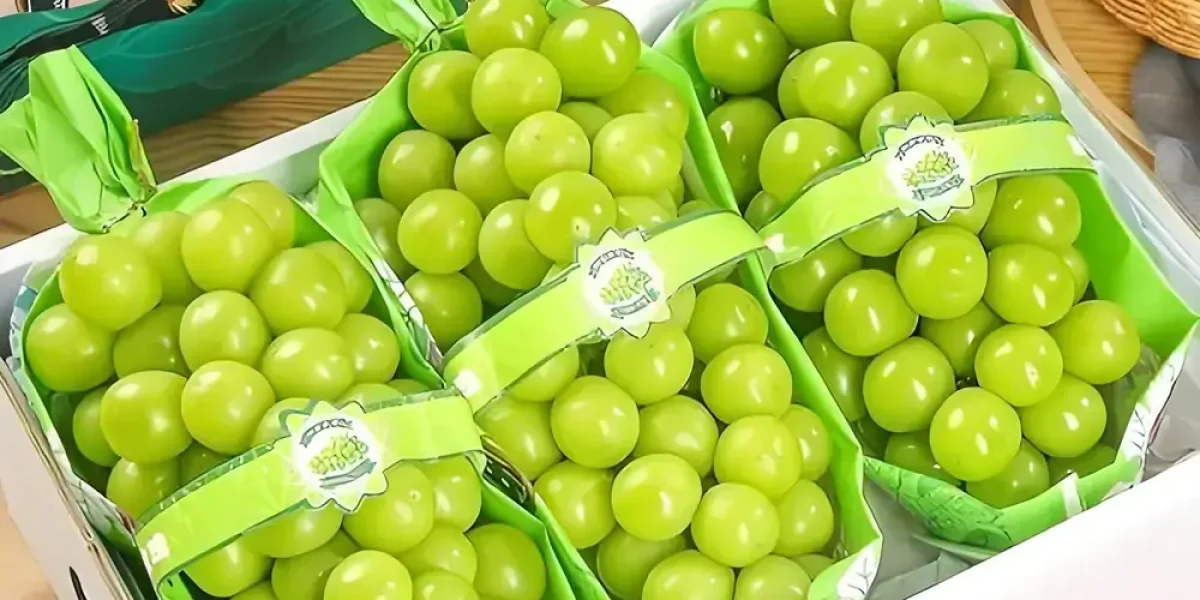
Shine Muscat grapes are known as one of the most expensive grape varieties in the world. But what makes them so costly?
Labor-Intensive Cultivation
**Superior Variety and Initial Scarcity:** The Shine Muscat is a hybrid variety developed in Japan, distinguished by outstanding attributes such as firm, crisp flesh; high sweetness; a distinct rose aroma; and excellent shelf life and transport durability. When first introduced to China, patent protections and limited access to seedlings restricted cultivation areas and supply volumes, creating a market dynamic where “scarcity commands a premium.”
**High Technical Threshold and Costs:** Compared to ordinary grapes, the cultivation requirements for Shine Muscat are extremely rigorous, resulting in significantly higher production costs.
**Substantial Infrastructure Investment:** Rain-shelters must be constructed to prevent disease outbreaks, with construction costs reaching 8,000 to 12,000 RMB per *mu* (approximately 0.067 hectares).
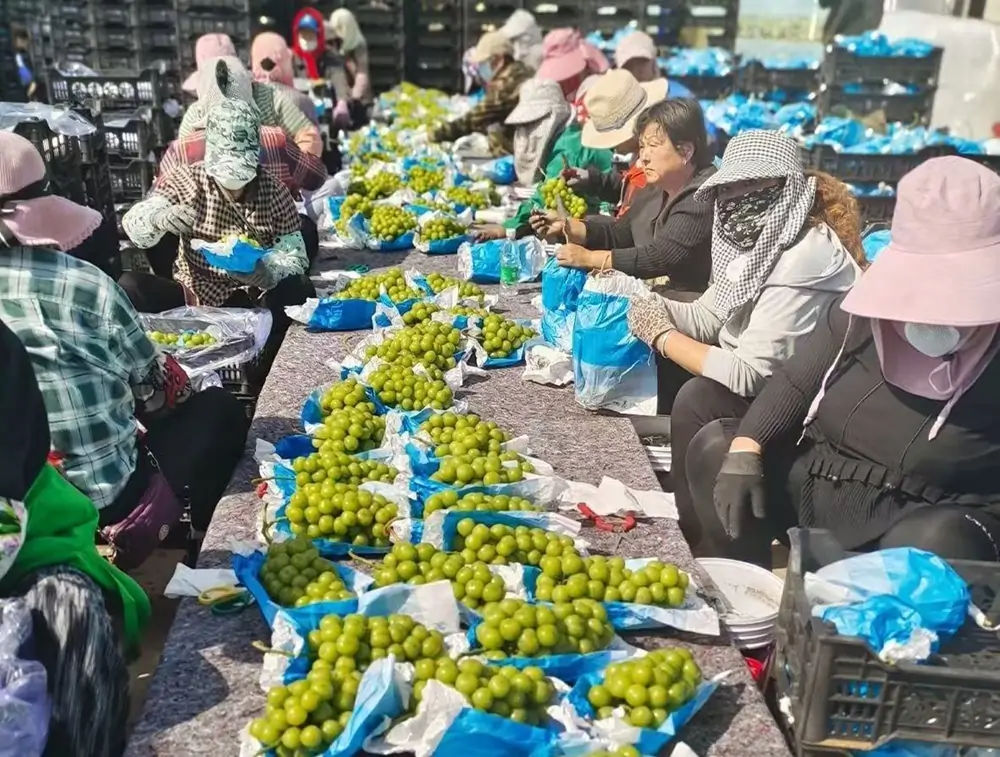
**Intensive Management:** Cultivation necessitates strict flower and fruit thinning (to control the number of berries per bunch), high-frequency integrated water and fertilizer management, and individual bunch bagging—processes that substantially increase labor and material costs.
**High Overall Costs:** Based on comprehensive estimates, the average annual cultivation cost per *mu* can range from 15,000 to 20,000 RMB—two to three times the cost of ordinary open-field grapes.
**Market Positioning and Quality Premium:** Due to its unique flavor profile (purely sweet with no acidity; crisp and juicy) and attractive appearance, the Shine Muscat was quickly positioned in the market as a premium gift fruit; strong consumer demand has further driven up its retail price.
Strict Quality Standards
**Appearance and Berry Specifications**
The grape bunch should be conical in shape with moderate density, and the berries should be uniform in size (weighing 12–15 grams each). The color should be yellowish-green or translucent emerald green, free from rust spots, cracks, or signs of sunburn. “Premium Grade” fruit requires a bunch weight of 500–800 grams and a berry count of 45–60, with a tolerance margin of no more than 5%.
**Sweetness and Flavor Profile**
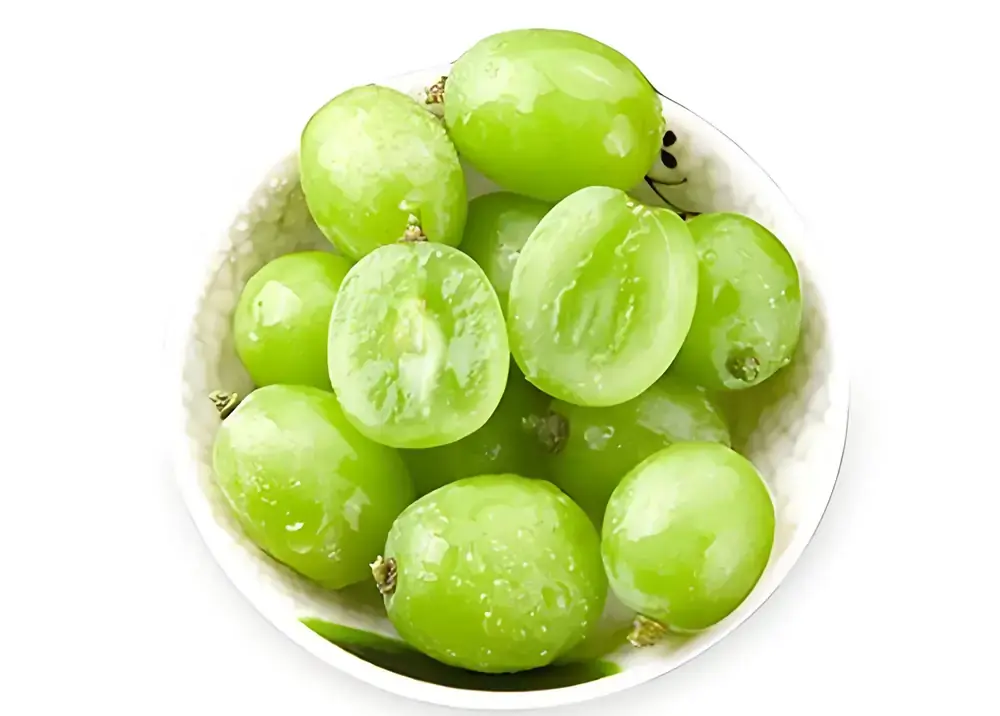
Sweetness is the core quality metric: Premium Grade fruit must have a sugar content of ≥18%; Grade 1 fruit, ≥17%; and Grade 2 fruit, ≥16%. The flesh must be crisp, tender, and juicy, possessing a distinct rose-like aroma, and be free from any sourness, astringency, or woody texture.
**Safety Testing Standards**
The produce must pass pesticide residue testing (e.g., acetamiprid, cypermethrin, etc., at levels ≤ 0.1 mg/kg) and comply with national Green Food standards. The fruit stems must retain a fresh green appearance, showing no traces of chemical residues or artificial ripening agents.
Harvesting must be conducted when the fruit has reached a minimum of 80% maturity, ensuring that sugar content loss during transit does not exceed 1%. Major domestic production regions (such as Meishan, Sichuan) typically affix traceability labels indicating the origin and the certifying inspection agency.
The standard refrigerated shelf life is 7–15 days, during which humidity levels must be maintained within a stable range of 85% to 90%.
Limited Supply Meets Robust Demand
In recent years, Shine Muscat grapes have enjoyed immense popularity in the market. Commanding high prices and achieving exceptional sales figures, they have truly distinguished themselves amidst the vast array of available fruits. The driving force behind this phenomenon is the explosive growth in market demand—a demand that has expanded at a pace far exceeding the actual increase in Shine Muscat production volume.
Cultivating a Premium Brand Image
Within the realm of premium fresh produce, Shine Muscat grapes have long transcended the category of ordinary fruit, becoming synonymous with a high-quality lifestyle, sophisticated gifting, and exquisite culinary indulgence. Defined by their “four highs”—exceptional visual appeal, intense sweetness, rich aroma, and superior texture—they firmly occupy the throne as the “top-tier” stars of the grape world. They are a cherished favorite among those who truly appreciate the art of living, and serve as the gold standard within the premium fruit market.
As a premium fruit, Shine Muscat grapes are primarily distributed to high-end supermarkets, upscale specialty fruit shops, and luxury hotels. In the context of gift-giving, they represent the epitome of sophistication and propriety. Presented in exquisite gift boxes featuring lush, plump clusters of emerald-green grapes, they offer a perfect blend of aesthetic beauty and tactile quality. Whether intended for corporate gifting, festive visits to friends, or as an elegant centerpiece for high-end banquets, they unfailingly convey both impeccable taste and sincere thoughtfulness. By breaking free from the perception of fruit as a mere low-cost commodity, and by earning a reputation as a product that is “expensive, yet worth every penny,” they have established themselves as the premier choice for fresh fruit within the premium consumer market.
Export and Logistics Costs
Premium grape varieties such as Shine Muscat require stricter temperature controls, specialized shock-resistant packaging, and rapid transit times; consequently, their logistics costs are 20% to 40% higher than those of ordinary grapes.
The greater the shipping distance—and the more limited the cold-chain infrastructure at the destination port—the higher the associated costs and potential for spoilage. Conversely, shipments to member nations of the RCEP (Regional Comprehensive Economic Partnership) benefit from established shipping routes and streamlined customs clearance procedures, resulting in significantly lower costs compared to destinations in Europe, the Americas, or Africa.
Air freight costs are typically 10 to 15 times higher than those of sea freight.
Factors such as fuel prices, container capacity, and peak export seasons (e.g., New Year and Christmas) all contribute to rising freight rates, with price surges during peak periods potentially reaching 10% to 30%. Pre-cooling efficiency, temperature control precision, and packaging shock resistance directly determine the rate of spoilage, which in turn leads to additional costs.
Will Shine Muscat grapes become cheaper in China?
When Shine Muscat grapes first entered the Chinese market, cultivation areas were small and yields were low, causing prices to remain prohibitively high. However, in the span of just ten years, domestic cultivation expanded from fewer than 10,000 *mu* to over 1.5 to 2 million *mu*. Production volume increased more than tenfold, and prices subsequently declined.
Reduced labor costs in orchards—combined with China’s sophisticated supply chain and logistics infrastructure—have also led to a significant reduction in transportation costs. Although Shine Muscat grapes remain a premium product, their exceptional flavor, quality, and unique characteristics are sufficient to convince many consumers that they offer excellent value for money. Furthermore, as domestic production in China continues to rise, Shine Muscat grapes are becoming increasingly accessible to consumers worldwide.