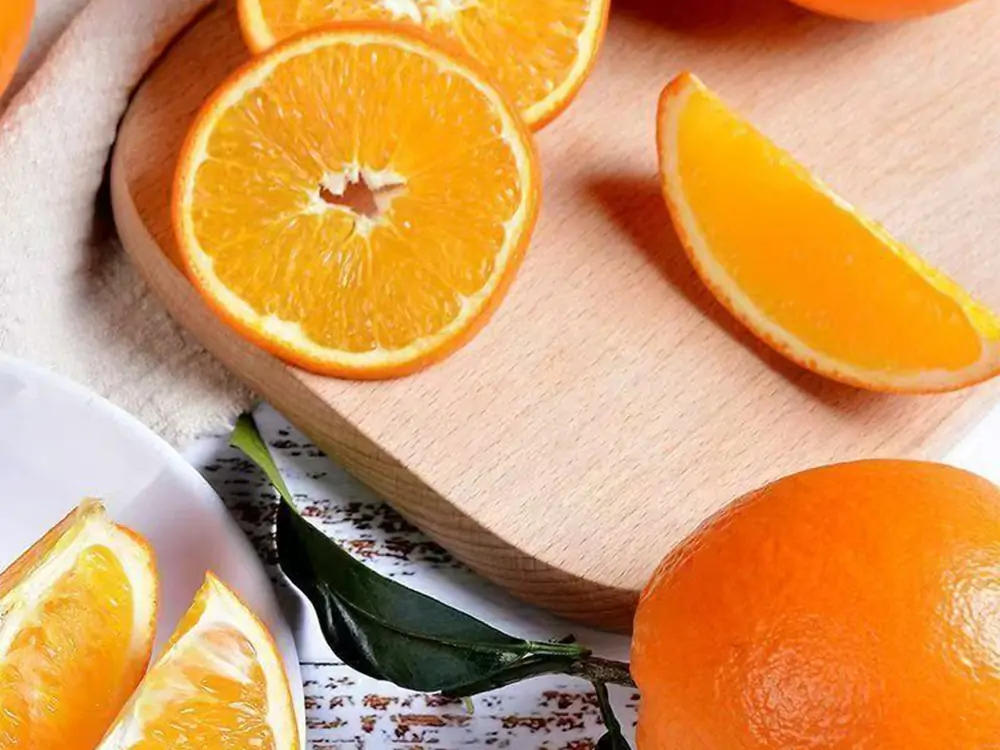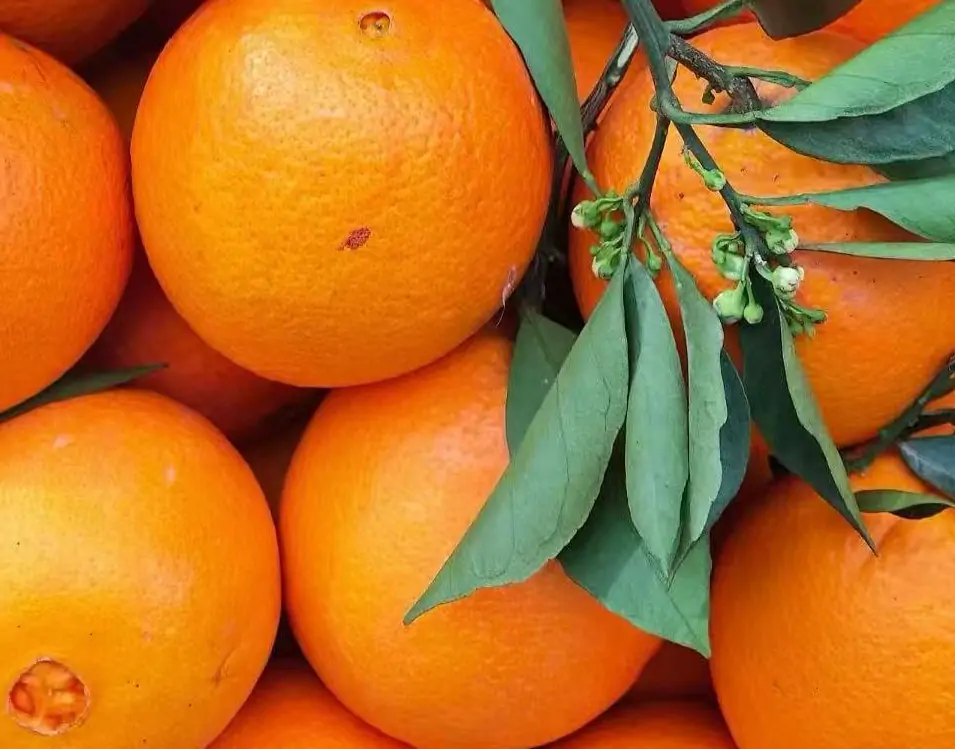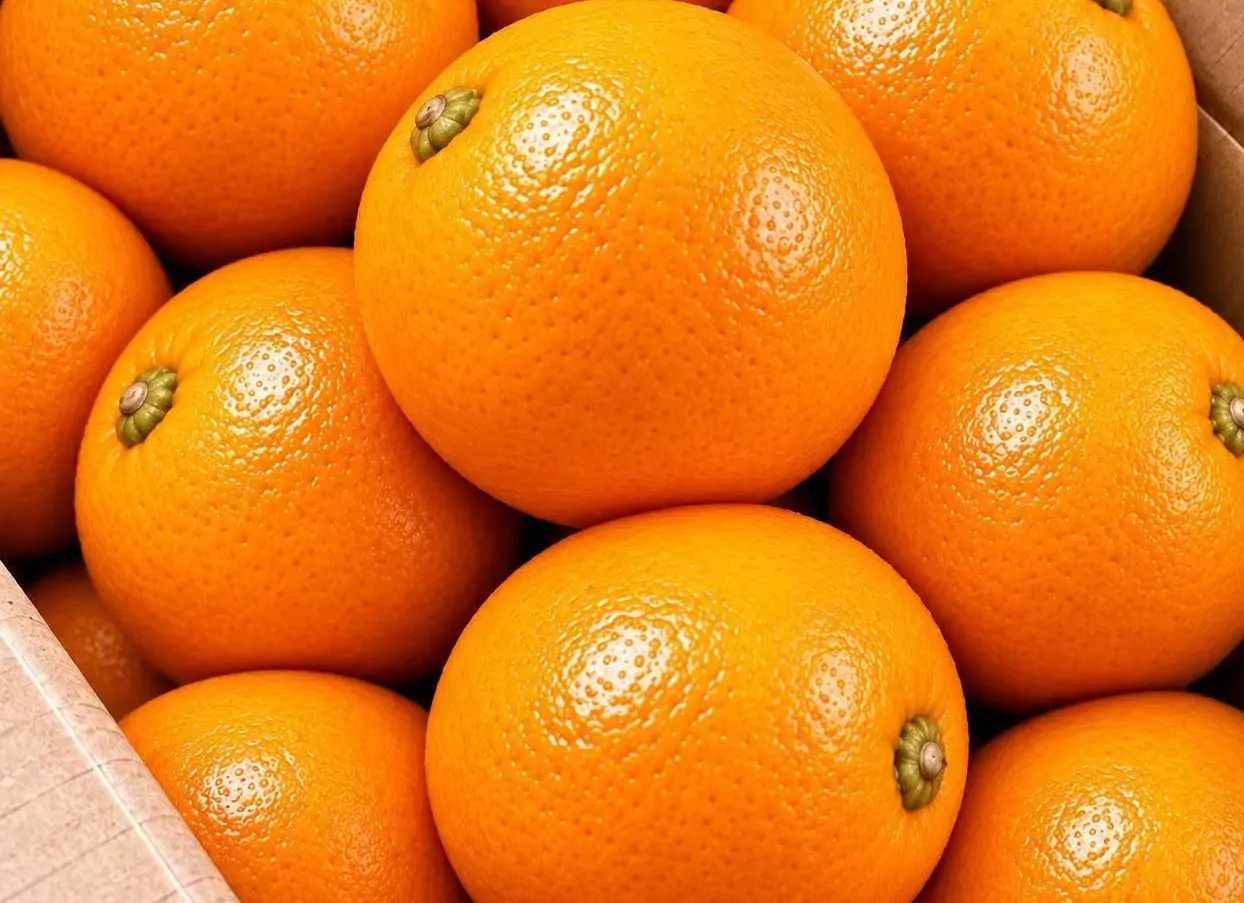

navel-orange-packaging

What exactly is that “little belly button” on a Navel Orange?
When winter arrives, navel oranges always take center stage in fruit shops. Peel back the skin, and you’ll find plump segments bursting with juice—sweet, tangy, and refreshingly seedless. Whether you eat them fresh, squeeze them into juice, or use them in desserts, they are perfect for any occasion.
But have you ever wondered: among all oranges, why does the navel orange grow that iconic “belly button”?
We often lump all these fruits together under the general term “oranges,” but how exactly do you tell them apart? Let’s dive into the differences between Navel orange, Rock sugar oranges (Ice sugar oranges), Blood oranges, and LunWan (late-ripening) oranges.
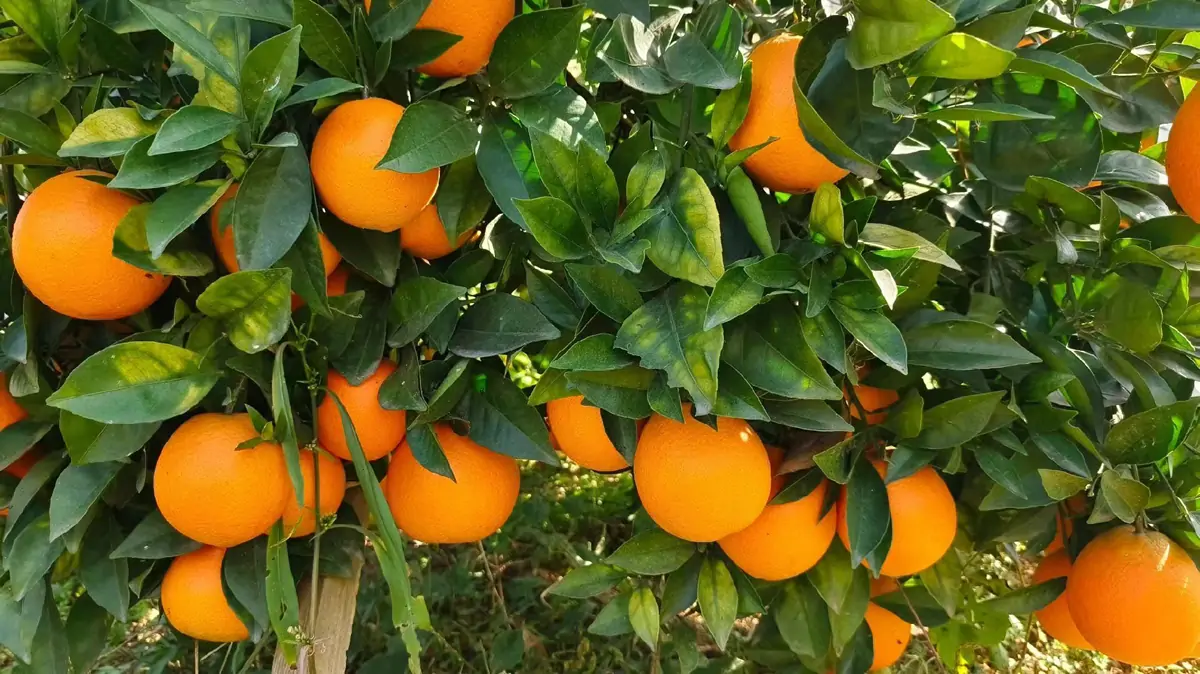
navel-oranges-on-tree

 Classification of Oranges

The orange (scientific name Citrus sinensis) originated in southern China and Southeast Asia and is a classic species of the genus Citrus. The vast majority of commercial oranges available on the market today belong to the sweet orange category (a hybrid of the wild citron and the modern cultivated mandarin), with the navel orange being a famous bud sport variety within the sweet orange family.
Generally, oranges can be divided into the following main categories

Navel Oranges (Seedless Sweet Orange Varieties)

Representatives: Newhall navel orange (the main cultivated variety in Gannan), Gannan Early navel orange (an early-ripening bud sport of the Newhall navel orange selectively bred in Gannan), Washington navel orange (native to the United States), Lunwan navel orange, and Fengjie navel orange, among others.
Characteristics: Featuring a distinct “navel” at the apex, these oranges develop via parthenocarpy and are naturally seedless. The flesh is crisp, tender, and virtually residue-free (melts in the mouth), offering a well-balanced sweet-and-sour flavor with a rich aroma. Their harvest season spans from autumn and winter through the following spring, making them the most commonly consumed oranges during the winter months.
Major Production Regions in China: Gannan (Jiangxi Province), Zigui (Hubei Province), and Fengjie (Chongqing Municipality).
Among these, the Newhall navel orange is the most widely planted mainstream variety in China. It is typically oval-shaped, predominantly features a closed navel, and has a smooth, orange-red peel.

Rock Sugar Oranges (Bingtang Oranges)

As a variety selectively bred in China, the Mayang rock sugar orange stands out as its prime representative. It lacks a navel, and the fruit is relatively small and round. With a notably high sugar content and very low acidity, it delivers a clean, refreshing sweetness—often described by many as “purely sweet without any tartness.” However, its main drawback is that its aroma is less pronounced than that of navel oranges.  

 Blood Oranges

As another variety of sweet orange, blood oranges contain anthocyanins in their flesh, giving it a crimson or carmine-red hue. They are mostly late-ripening, reaching maturity between February and April. The red pigmentation in the flesh is typically unevenly distributed. They boast a rich, intense flavor, though their acidity is generally higher than that of navel oranges.

Summer Oranges

This is a late-ripening variety known for bearing both flowers and fruits on the same tree simultaneously. Ripening in summer, it features a skin with an alternating green and yellow appearance. The flesh is slightly tart with lower sweetness, making it mostly used for juicing.
Navel oranges are not a variety that has existed since ancient times. The widely recognized origin traces back to 1820, when a natural bud mutation occurred on a common sweet orange tree at a monastery in Bahia, Brazil, producing fruit with a navel and no seeds. Because they are seedless, all navel oranges worldwide are propagated entirely through grafting. This means that the hundreds of millions of navel orange trees across the globe today are all descendants of that single original tree.   
juicy-navel-orange

Why Is the Navel Orange Called a “Navel” Orange?

Many people are surprised the first time they cut open a navel orange: tucked inside the navel is a tiny cluster of miniature orange flesh, like a little baby hidden inside the fruit.
In fact, the “navel” of a navel orange is essentially a group of incompletely developed secondary carpels at the apex of the fruit — in other words, a poorly developed secondary fruit. In folk usage, it is also called the “child-embracing orange.”
An orange flower contains multiple carpels. In a normal sweet orange, these develop into a single fruit; but in the navel orange — a bud-mutation variety — an extra set of small carpel structures forms during ovary development and is enclosed by the outer peel. In some cases the navel is open, revealing the small secondary fruit; in others it is a closed navel, which looks smooth on the outside, yet the secondary structure is still present inside once cut open.
It is not a scar caused by insect bites, nor is it the result of bruising sustained later on.

 Are Oranges with a Larger Navel Tastier?

Not necessarily. Navel oranges with a very large open navel are more prone to losing moisture and letting in pathogens through the navel, so they do not keep well. Among commercial fruit, many high-quality Newhall navels have a closed navel or a small navel, and their flavor is consistent. The navel is simply a varietal trait — it is not the sole yardstick of sweetness.

Anatomy of an Orange

Stem End (Calyx): The part where the fruit connects to the stem, bearing the sepals. On fresh fruit, the stem end is green and firm; on stale or prematurely ripened fruit, it becomes dry, blackened, and falls off easily when touched.
Flavedo (Outer Peel): The yellow-orange skin we see. The dense tiny dots on the surface are oil glands (oil cells) filled with aromatic essential oils—the fragrance you smell when peeling an orange is released when these oil glands rupture. The surface also has a natural fruit wax to lock in moisture.
Albedo (Sponge Layer / Pith & Citrus Reticulation): The white spongy part inside the orange peel, commonly known as the pith. Thread-like citrus reticulations (vascular bundles) branch out within it, responsible for transporting nutrients to the pulp. This is the part often referred to as “ju luo” in Traditional Chinese Medicine, which is rich in dietary fiber.
Carpels (Segments): Developed from the carpels of the flower. An orange generally has 8–12 segments, each enclosed by a thin membrane.
Juice Vesicles (Pulp): The tiny, juice-filled granules inside the segments. This is the edible pulp we consume and the most core edible part of the orange, where the juice, sugars, and Vitamin C are concentrated.
Core (Central Column): The spongy center where all the segments converge, serving as the central channel for nutrient transport.
Navel (Secondary Fruit): Unique to navel oranges, located at the apex of the fruit. It is an undeveloped secondary fruit mentioned earlier; common sweet oranges do not have this structure.
A lot of people pick off all the white stringy bits when peeling an orange. But honestly, they don’t taste weird and are packed with dietary fiber, so you don’t have to remove them all. Just a heads-up: some varieties with thicker inner peels might be a bit bitter, so you can pick them off if you mind the taste.
ripe-navel-oranges-on-tree

Tips for Selecting Navel Oranges


Putting aside the common misconception that “the bigger the navel, the sweeter the fruit,” we are sharing a selection logic verified by professional technicians, listed in order of priority:
1,Weighing: For the Same Size, Heavier is Better
A heavy feel indicates ample moisture and plump juice vesicles; a lightweight orange has lost water over time, leaving the pulp dry and tough.
2,Check the Peel: Fine Oil Glands with a Natural Luster — Avoid Excessive Shine
Naturally ripened navel oranges feature a soft orange-yellow or orange-red peel with distinct oil glands and a slightly bumpy texture. If the peel looks polished, mirror-like, or feels sticky, it has most likely been artificially waxed or even dyed.
3, Check the Shape: Prioritize Symmetrical Oval Navel oranges; Avoid Deformed Fruits
Deformed, crooked fruits, or those with hard spots and mechanical scars on the peel, are prone to uneven internal development. Fruits with a closed or small navel have better storage stability.
4,
Check the Feel: Firm and Elastic, Not Soft or Mushy
Apply gentle pressure; the fruit should spring back. If it feels soft in certain spots, it has likely started to deteriorate.
5,Smell the Aroma: Near the Stem or Navel, Look for a Fresh, Natural Orange Fragrance
Artificially ripened or dyed fruits have a very faint natural aroma, sometimes emitting only a chemical smell.When selecting oranges, don’t blindly chase the ones with the deepest red color. While fruits grown with ample sunlight and significant day-night temperature differences tend to be redder, their sweetness isn’t determined by this redness. In fact, many lighter orange-yellow oranges actually have a higher sugar-to-acid ratio.

 How to Identify Pesticide Residues vs. Polishing and Waxing

Relying solely on sight, touch, and smell cannot determine whether pesticide residues exceed safety limits. An orange’s peel naturally contains natural fruit wax secreted by the plant itself to lock in moisture. After harvesting and washing, some packing houses apply compliant, commercial food-grade preservative wax for polishing. The surface characteristic of this process is an unusually shiny and slightly sticky peel, which is a normal phenomenon.
Most pesticide residues are colorless and odorless, making them invisible to the naked eye. The fluorescence seen under a UV light is often caused by natural substances in the orange, such as flavonoids and coumarins, rather than pesticides. Only laboratory instruments or colloidal gold pesticide residue test strips can provide a rough screening.
However, pesticide residues, illegal fruit dyeing, and non-compliant waxing—often referred to as “industrially beautified oranges”—can be easily identified: if you wipe the fruit vigorously with a wet wipe and it turns noticeably red; if the stem is dyed red; or if red pigment is trapped in the pores of the peel. It is best to avoid buying such oranges, as they show signs of non-compliance.

 Safe Ways to Eat Oranges

If you plan to steam the orange with its peel or use the zest, scrub the peel under running water and gently brush the surface with a soft-bristled brush before eating. If you are concerned about preservatives, soak the orange in lightly salted water for 5 to 10 minutes before rinsing.
Generally, the safest approach is to peel the fruit before eating. The albedo (the white spongy layer between the peel and the flesh) acts as a barrier, meaning the flesh of a navel orange rarely comes into direct contact with pesticides.
Fun fact: In standardized navel orange orchards, pesticides are applied according to registered guidelines and pre-harvest intervals. By the time the fruit reaches maturity and is harvested, the pesticide residues on qualified products will be well within national standard limits, so there is no need to panic. What we should be vigilant about are illegal early harvesting, illegal dyeing, and industrial waxing, rather than developing an irrational fear of all pesticides.
navel-orange-shipping-box
A single navel orange holds a wonderful botanical coincidence. Every bite we enjoy traces back to a one-in-a-hundred-million natural mutation in Brazil over 200 years ago. Seedless, it crossed oceans via grafting to make its home in the mountainous regions of Sichuan, Hubei, and Yunnan in China. Adapting to our local sunlight and temperature variations, it has become a beloved winter fruit for the nation.
Its “little navel” is not a flaw, but a unique genetic marker. Its sweet-and-sour flavor is gradually accumulated through significant day-night temperature differences and a long growing period. Next time you pick up a navel orange, don’t rush to peel it. Take a moment to look at its small navel and appreciate the aroma released from the dense oil glands on its peel. Understanding its story makes eating it even more delightful.
China Citrus
Privacy Overview

This website uses cookies so that we can provide you with the best user experience possible. Cookie information is stored in your browser and performs functions such as recognising you when you return to our website and helping our team to understand which sections of the website you find most interesting and useful.