Mandarin Orange Fruit Thinning Management
Fruit thinning is a crucial element of Mandarin orange cultivation management. When citrus trees bear excessive fruit and are overloaded, proper fruit thinning techniques can control the fruit quantity, improving fruit quality, and ensuring a reasonable burden on the tree. This is an important way for maintaining stable yields and improving fruit quality year after year.
Many mandarin orange growers have a misconception: they believe that a huge fruit load this year will guarantee a good harvest and high economic benefits. They fail to realize that an excessive fruit load can negatively impact the following year’s yield, leading to situations where one year’s citrus harvest is plentiful while another year yields very little.
This largely stems from one thing: reluctance to remove excess fruit!
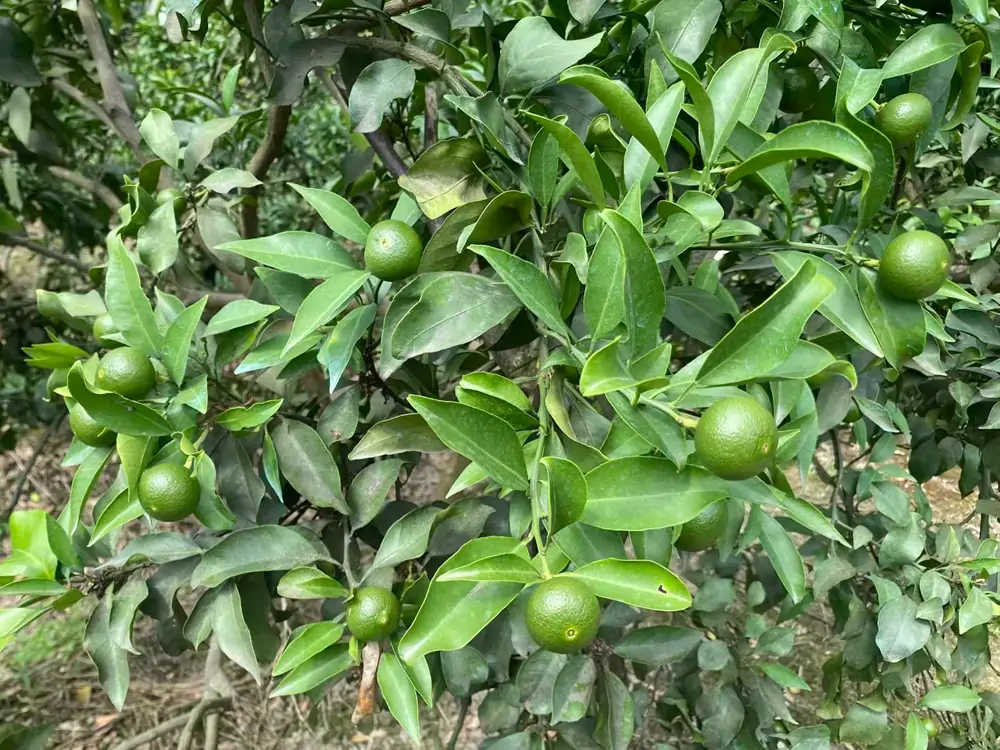
Many fruit growers, seeing citrus trees densely covered with fruit, are reluctant to remove the extra fruit, regardless of density. They are unwilling to remove any of it. Only when the citrus is almost mature do they realize that the branches are overloaded with fruit. Too much fruit consumes the tree’s nutrients, resulting in poor tree growth, substandard fruit size, and lower selling prices. This leads to greater losses than gains. Fruit thinning actually offers many benefits in citrus cultivation. Once you fully understand these benefits, you won’t be so hesitant to remove excess fruit. Let’s learn about the benefits and techniques of citrus fruit thinning
Benefits of Fruit Thinning
1. Improved Tree Vigor, Ensuring a Good Fruit Yield Next Year
When keeping fruit, the tree’s vigor should be fully considered. Older, weaker trees should retain fewer fruits, while stronger trees can retain more. This improves fruit quality and reduces the phenomenon of alternating periods of abundant and scarce fruit, leading to better yields next year.
2. Fruit-Driven Shoot Growth
The development of citrus fruit consumes a large amount of nutrients, which inhibits the growth of autumn shoots, especially at the top of the tree canopy. That’s why weak trees often have many fruits and fail to produce sufficient autumn shoots.
3. Improved Fruit Quality
Poor-quality fruit can sometimes fetch a price difference of 1-2 times compared to high-quality fruit. Enhancing fruit quality leads to greater economic benefits.
Fruit Thinning Time
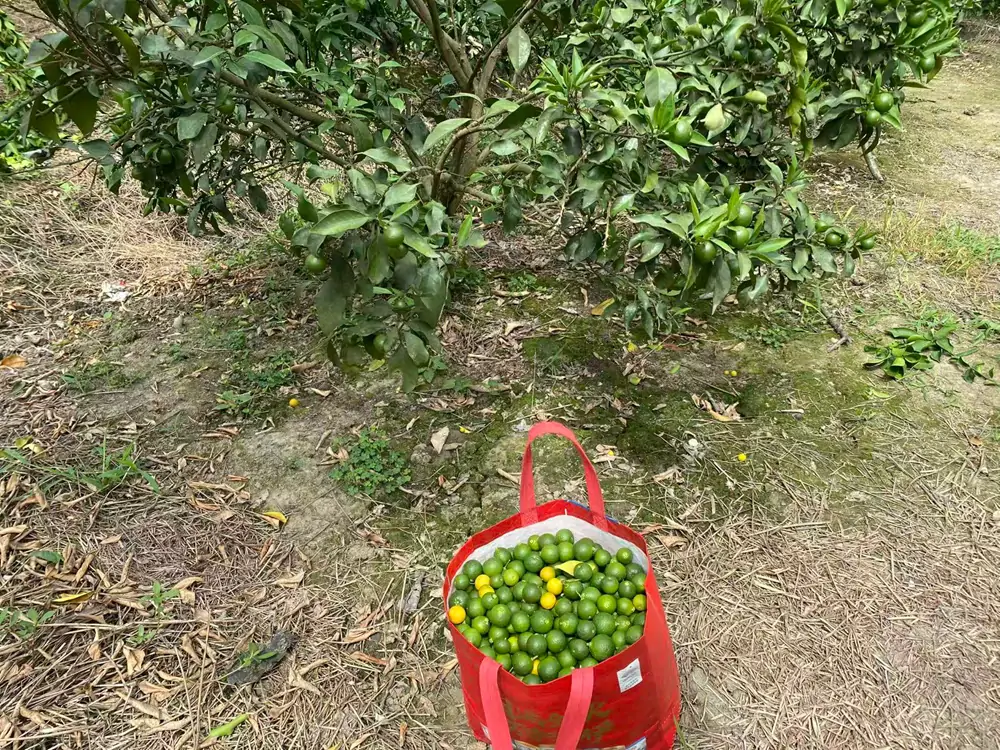
Currently, it is mid-July. For most citrus varieties, this is the critical window for the second fruit thinning (fruit setting), while some late-maturing varieties are about to begin their first round of fruit thinning. The core objective of fruit thinning at this time is to determine the final fruit load, concentrating nutrients on supplying high-quality fruit, avoiding the phenomenon of “more fruit one year, less fruit the next,” and improving the marketability of the fruit.
Fruit thinning for all citrus varieties should begin when the second physiological fruit drop is basically complete, usually in two stages, and be largely completed by September.
If physiological fruit drop has not yet ended, fruit thinning is not advisable. Early thinning after fruit setting is better; later thinning will significantly impact yield and should not be done.
Timing of the First Fruit Thinning for Different Citrus Varieties
Purpose: To promote fruit enlargement and facilitate root growth and the emergence of fruiting branches.
Early to mid-maturing varieties (such as Harumi Mandarin/Papa gan and common Wenzhou mandarin): The second fruit thinning should be finished in mid-to-late June. Currently (mid-July), if there are still overly dense or poorly developed fruits, supplementary thinning is necessary, focusing on removing fruits that are obscured by branches and leaves.
Timing of the First Fruit Thinning for Different Citrus Varieties
Purpose: To adjust fruit size, improve quality, and strengthen fruiting branches to lay the foundation for flower bud differentiation. See → Cultivation of Autumn Shoots and Fruiting Branches in Citrus for details.
Late-maturing varieties (such as Orah/Wogan and sumo citrus): The first round of fruit thinning is usually carried out from late July to early August. Currently, the focus should be on observing fruit enlargement and preparing for the upcoming thinning work. At the same moment, should be pay attention to properly controlling summer shoots to avoid competition for nutrients between shoots and fruits.
Thinning Principles: 1. Remove inferior and retain superior: Resolutely remove diseased, insect-infested, deformed, blemished, and small fruits. These fruits not only consume nutrients but also reduce overall sugar content and selling price, and may even spread diseases.
2. Reduce density and maintain even spacing: Reserve space based on the mature fruit diameter of the variety. For instance, for varieties like Chun Jian and Ai Yuan, the fruit spacing should be around 20cm; for varieties with smaller fruit diameters, this can be reduced to 15cm to prevent fruit rubbing against each other and causing damage.
3. Determine fruiting based on branch: Follow the principle of “retain more on strong branches, fewer on weak branches.” Strong fruiting branches can retain 3-4 fruits, moderately vigorous branches 2-3, and weak branches only 1 or none, to balance the tree’s vigor. 4. Determine the number of fruits to retain based on the fruit-to-leaf ratio: For small-fruited varieties, a leaf-to-fruit ratio of 20-40:1 is recommended; for extra-early and early-maturing Satsuma mandarins, 30-35:1; for mid-to-late-maturing Satsuma mandarins, 20-25:1; for medium-fruited varieties, 40-60:1; and for large-fruited varieties, such as pomelos, 150-200:1. For vigorous trees, the leaf-to-fruit ratio can be appropriately reduced; for weaker trees, it can be appropriately increased.
5. Determine the fruit thinning method based on the fruit load: For trees with a heavy fruit load, thin more fruit to ensure the fruit load is within a reasonable range that the tree can handle, protecting yield and quality and avoiding alternate bearing. For trees with a light fruit load, thin less fruit or only remove diseased, insect-infested, or deformed fruit to ensure yield.
6. Fruit thinning should be combined with summer shoot control: Late-maturing citrus varieties such as Satsuma mandarins, navel oranges, and ponkan oranges are prone to fruit-to-shoo conflict; therefore, it is important to control the growth of summer shoots. For varieties with a particularly large number of terminal fruits, such as Murcott and Wogan, it is necessary to retain some summer shoots to reduce sunburn.
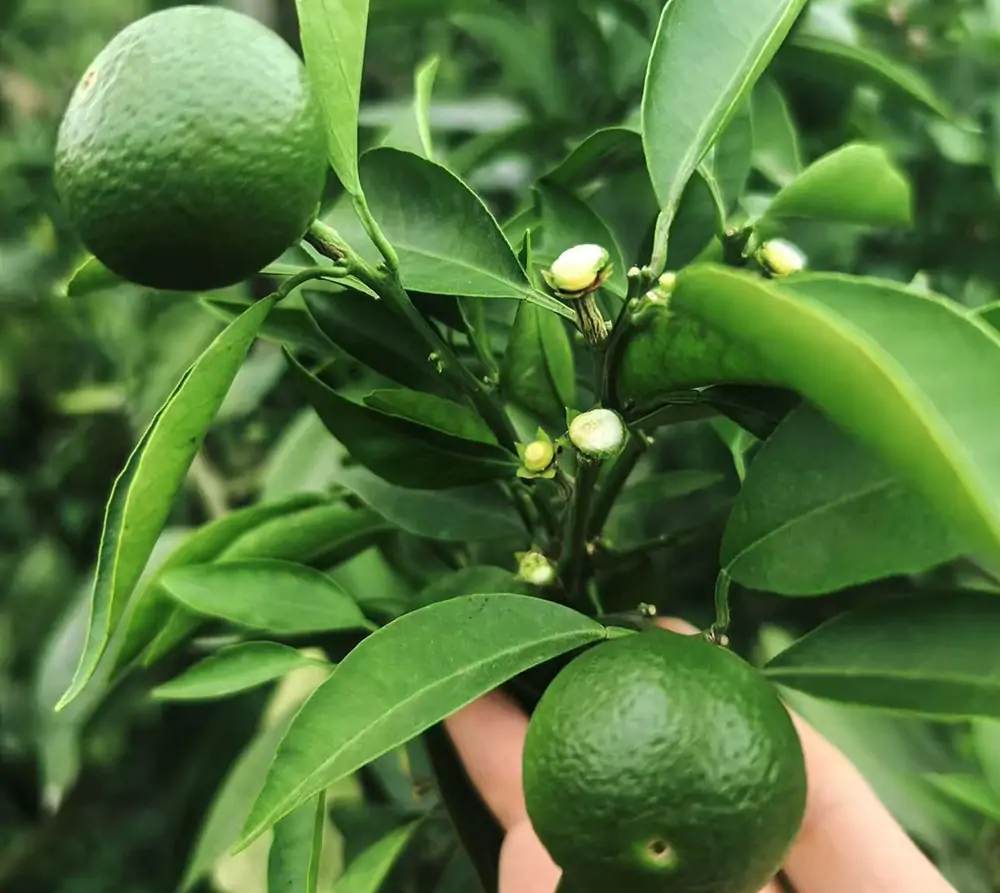
Fruit Thinning Methods
Through years of management experience in orchards and farms, a simple rule for fruit thinning has been summarized: “Keep long branches, remove short and diseased branches; good fruit, good price goes without saying; bagging is convenient and doesn’t damage the fruit; follow the method.”
1. Citrus Fruit Thinning – Retaining Long Branches: Retaining long branches in citrus fruit thinning doesn’t mean selecting only the longest fruiting branches. It means prioritizing young fruits with longer pedicels. This ensures that the fruit is easy to handle during bagging, preventing it from being knocked off or damaged.
Since mid- and late-maturing citrus varieties now require bagging for better sales, and bagging is both labor-intensive and expensive, neglecting proper thinning beforehand can easily lead to fruit drop and damage during bagging, further increasing labor costs. Specifically, regarding the requirements for thinning citrus fruit, the first step is to observe the fruit load on the branches before thinning. Prioritize retaining young fruits with slightly longer stalks. Generally, fruits bearing fruit at the tips of shoots tend to have longer stalks, and these fruits are easier to bag later.
2. Citrus Fruit Thinning – Removing Short Stalks: When selecting fruits to retain, prioritizing those with longer stalks and remove those with shorter stalks. Otherwise, these fruits are more prone to dropping during bagging later. Even with careful handling, the chance of fruit drop is relatively high, and once dropped, it cannot be remedied. Furthermore, short-stalked citrus fruits take longer to bag, and labor costs are currently quite high.
When thinning citrus fruit, after ensuring the required number of fruits remain on each branch, first remove young fruits with short stalks, those at the branch tips, and some upward-facing fruits. Young fruits with unfavorable pedicel attachment points, such as lateral fruits or fruits with raised shoulders, should also be removed.
3. Citrus Fruit Thinning – Removing Diseased and Weak Fruits
When thinning citrus trees, diseased fruits must be removed unlimited. Leaving these fruits on the tree will not only prevent them from growing properly but also waste the tree’s nutrients and hinder the normal growth and expansion of other fruits.
Furthermore, some weak fruits on fruiting branches may be reluctant to be removed because the branch itself has no other fruit. For these weak fruits, the overall fruit load of the tree and the number of fruits remaining on surrounding branches should be considered. When the overall fruit load of the tree is already properly, these weak fruits should be removed promptly. Even if the overall fruit load of the tree is insufficient, if the branches surrounding the weak fruit have sufficient fruit, these weak fruits should still be removed.
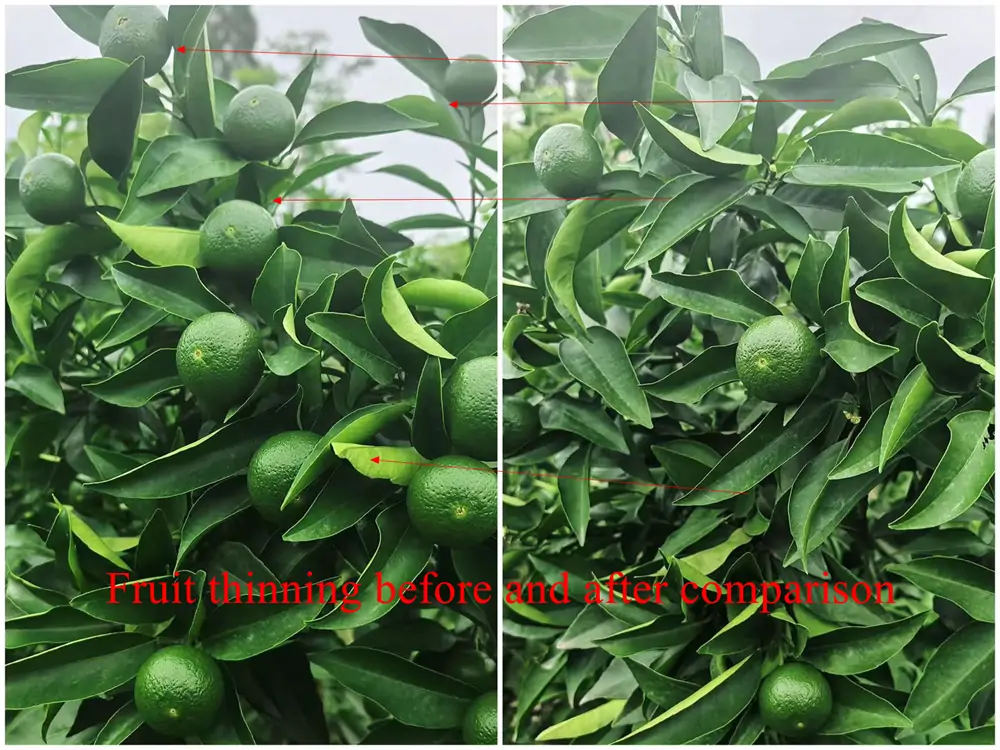
These are some tips and good methods for thinning fruit during citrus cultivation in China. If you have better methods, please share them in the comments section. Let’s learn more and more advanced agricultural cultivation methods together.