
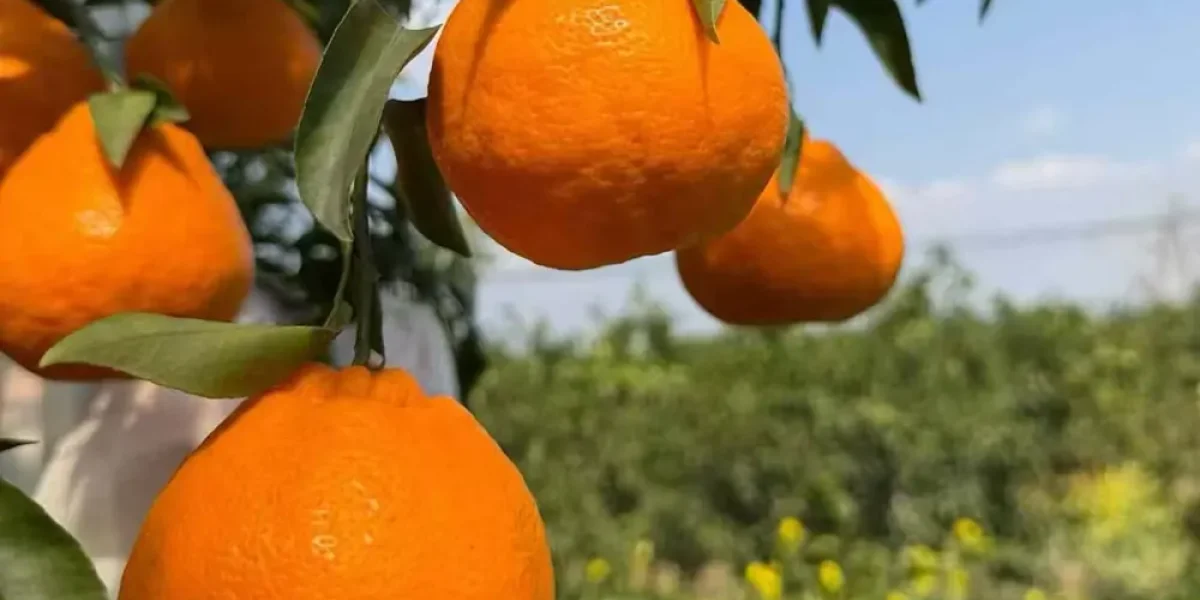
Harumi Mikan Mandarin orange in china also known as ChunJian or PaPa Gan, is widely commended for its exceptional sweetness, rich aroma, and easy-to-peel skin. Originally breeded in Japan, this premium citrus variety has gained increasing popularity in China, where large-scale cultivation has expanded rapidly in recent years. Although Chinese and Japanese Harumi Mikan Mandarin orange share the same genetic origin, there are noticeable differences in cultivation practices, fruit characteristics, and market positioning.
Origin and Development
The “Harumi Mikan Mandarin Orange” variety was created in 1979 through a cross between “Kiyomi” and “Ponkan” and was officially named in 1996. Its name signifies the arrival of spring at the end of winter, evoking the feeling of spring when it maturation. Chunjian is characterized by its soft, easy-to-peel peel, plump, juicy flesh, and crisp, refreshing taste, combining the crispness of Kiyomi with the sweetness of Ponkan, resulting in a mild flavor. Harumi Mikan is mainly produced in Hiroshima Prefecture (accounting for over 30% of the national production), Ehime Prefecture, Wakayama Prefecture, and Shizuoka Prefecture (the original breeding area).
Harumi MikanMandarin Orange Introduced to China in 2001, was bring in later but quickly gained popularity due to its strong consumer demand and excellent market price. Provinces such as Sichuan, Hunan, Hubei, and Zhejiang have become major production regions. With favorable climates and expanding orchard areas, China has rapidly increased production volumes.
Cultivation Methods
Japanese Harumi Mikan production typically follows very strict orchard management standards. Growers control tree vigor, limit fruit load, and use precise fertilization and pruning techniques. Many orchards also use rain shelters or greenhouse-mode cultivation to ensure stable fruit quality.
In China, cultivation modes vary depending on region and farm scale. Some farms have adopted advanced technologies such as automatic drip irrigation, scientific fertilization, and drone spraying of pesticides, but many orchards still use traditional planting methods. As a result, fruit quality can vary even greater than in Japan.
Fruit Quality and Appearance
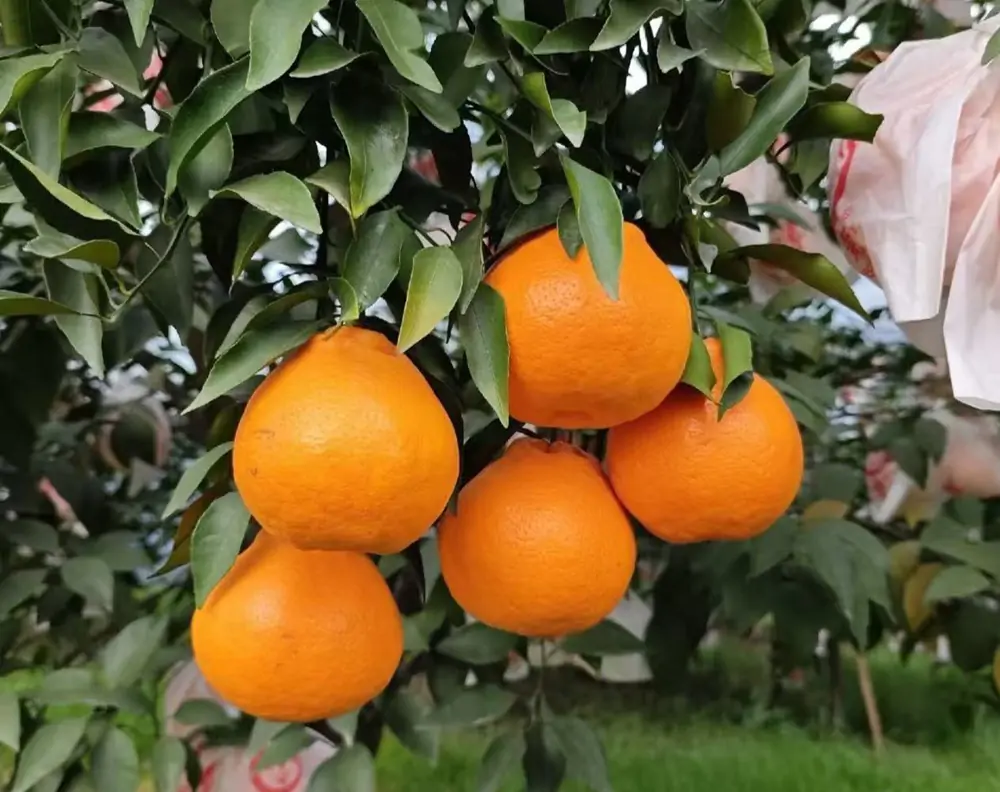
Japanese Harumi Mikan is generally known for its uniform fruit size, smooth skin, and high sugar content. The fruit usually has a bright orange color and a well-balanced flavor profile.
Chinese Harumi Mikan, particularly those grown in Sichuan Province, can also achieve excellent sweetness due to favorable sunlight and temperature differences between day and night. However, the external appearance and uniformity may vary more depending on orchard management practices.
Recently years, some Chinese growers have significantly improved fruit quality through better cultivation techniques, allowing Chinese Harumi Mikan to compete strongly in domestic markets.
Market Position and Pricing
Japanese Harumi Mikan is often marketed as a high-end premium fruit, both domestically and in export markets. Strict grading standards, strong brand influence, and high planting costs are the main reasons for its high price.
Chinese Harumi Mikan mainly targets the large domestic market, where demand for sweet, easy-to-eat citrus fruits continues to grow. Because of larger production volumes and lower production costs, Chinese Harumi Mikan is generally more affordable, making it accessible to a broader range of consumers.

China’s Advantages
As Chinese orchard growers continue to improve orchard management and post-harvest processing techniques, the quality gap between Chunichibashi mandarins is gradually narrowing. At the same time, China’s large-scale production capacity and suitable growing regions give it significant advantages in supply and market expansion.
In the future, both countries are likely to maintain distinct strengths: Japan focusing on premium branding and strict quality control, while China emphasizes large-scale production and competitive pricing.
Harumi Mikan mandarin Orange will continue to maintain their highly regarded status in the fruit world, bringing consumers sweet, fragrant, and affordable citrus fruits.