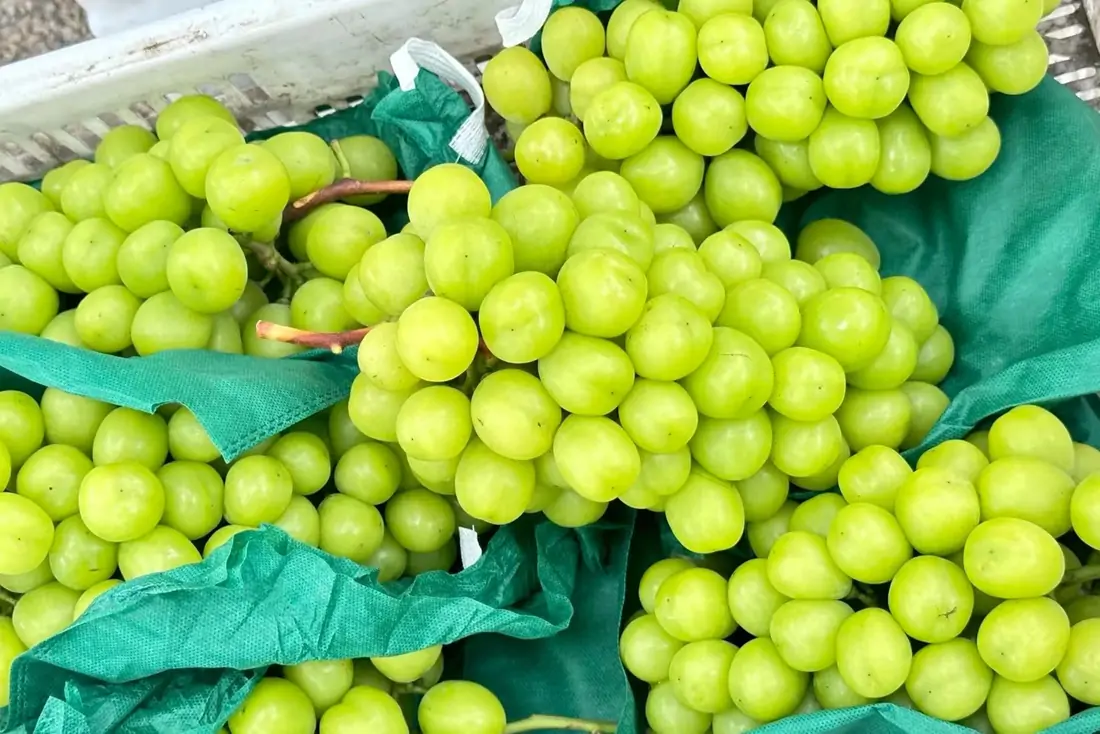
Shine Muscat grapes have rapidly evolved from a niche luxury fruit into a globally traded premium commodity. However, in recent years, the market has entered a new phase characterized by expansion, price adjustments, and regional differentiation. We can look at the latest trends, supply and demand relationships, and future development opportunities by examining consumer markets, primarily in China, Southeast Asia, and globally.
China Market Trends: From Premium Fruit to Mass Consumption
China has become the largest production base for Shine Muscat grapes, fundamentally reshaping the global supply landscapeRapid Expansion of Production,Over the past decade, Chinese farmers have aggressively expanded planting areas due to the high profitability of Shine Muscat. Today, large-scale cultivation is concentrated in regions such as Sichuan, Yunnan, Zhejiang, and Xinjiang. This expansion has significantly increased supply.According to industry reports, the surge in domestic production has led to greater availability and lower prices, transforming Shine Muscat from a luxury gift fruit into an everyday consumer product.
Price Decline and Market Adjustment,As supply continues to rise, prices have dropped sharply:Once-premium grapes are now widely affordable,Competition among growers has intensifieProfit margins are shrinking This shift reflects a classic supply-driven market correction, where increased output leads to price normalization.
China’s exports of Shine Muscat grapes,China is also strengthening its role as an exporter:Shipments to Southeast Asia and the Middle East are increasing Standardized production and cold-chain logistics are improving
Southeast Asia Market Trends: Fast-Growing but Price-Sensitive
Southeast Asia has emerged as one of the most important import markets for Shine Muscat grapes.Strong Demand Growth in Vietnam,Thailand,Indonesia,Malaysia have seen rising consumption due to:Increasing middle-class income,Popularity of premium fruits as gifts,Strong influence of social media and lifestyle trends
Shift from Luxury to Affordable Premium.Initially, Shine Muscat was sold as a high-end imported fruit, but the market has shifted:Prices have dropped significantly due to Chinese supply The fruit is now accessible to a broader consumer base.For instance, in Vietnam, wholesale prices have fallen dramatically compared to earlier years, reaching record lows due to abundant imports.
The Southeast Asian market is becoming highly competitive:Chinese suppliers dominate on price Korean and Japanese grapes compete on premium quality
Unlike Japan or Korea, Southeast Asia is evolving into a volume-driven market, where:Price competitiveness matters more than origin
Mid-range quality products perform best Volume Over Premium
International Market Trends: Expansion with Structural Challenges
Globally, the Shine Muscat market is expanding, but it is also facing structural challenges.Rising Global Popularity.Shine Muscat grapes are gaining traction worldwide because of:Seedless convenience,High sweetness and aroma,Premium visual appeal
They are increasingly sold in:Supermarkets,High-end fruit stores,
E-commerce platforms The variety has shifted from a gift fruit to a mainstream premium product.
Countries like South Korea and China are actively expanding exports: Korea has opened new markets such as Australia,Exports to Taiwan, the U.S., and the Middle East are growing
However, global markets are facing a major issue: oversupply.In key producing countries:Excess planting has led to falling prices,Market saturation is reducing profitability,Farmers are being forced to reconsider crop strategies,For example, in South Korea, prices have dropped dramatically—by more than 80% compared to peak years—due to oversupply and inconsistent quality.
Increasing Importance of Branding and Standards To remain competitive, exporters must focus on:Strict quality control (Brix level, size, uniformity),Branding and origin differentiation,Compliance with international phytosanitary standards
Key Market Trends Summary
Across all regions, several core trends define the Shine Muscat market:
1. From Scarcity to Oversupply
Rapid expansion in China and Korea Prices declining globally
2. Market Segmentation
High-end: Japan, premium Korean exports
Mid-range: Southeast Asia
Mass market: China domestic
3. Quality Determines Value
High-quality grapes still command premium prices,Poor-quality fruit damages consumer trust
4. Export Markets Are Expanding
Southeast Asia remains the largest growth engine New markets (Australia, Middle East) are emerging
5. Transition to Mature Market
The Shine Muscat industry is moving from:“High-profit niche crop”to“Competitive, standardized global fruit category”
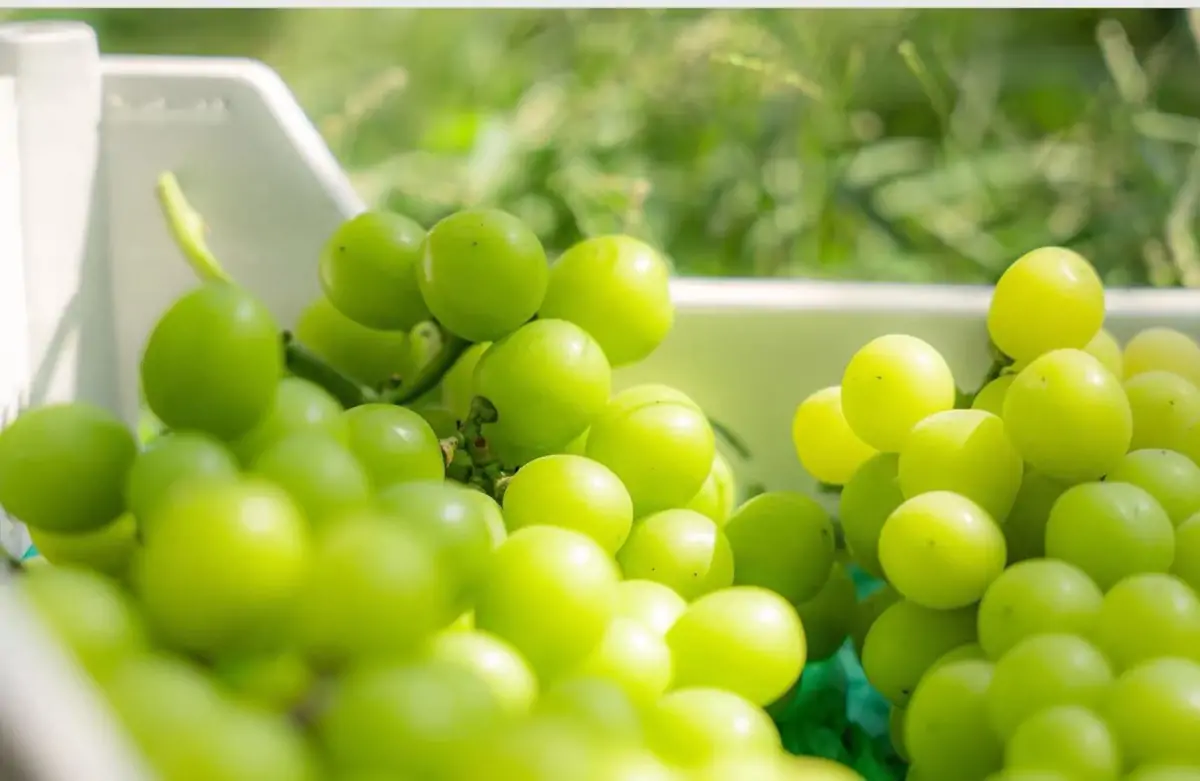
The global Shine Muscat grape market is undergoing a significant transformation. China’s large-scale production has reshaped supply, Southeast Asia is driving demand growth, and international markets are expanding despite increasing competition.Looking ahead, the winners in this market will not be those who produce the most—but those who can deliver:consistent quality,strong branding,efficient supply chains
Shine Muscat is no longer just a luxury fruit—it is becoming a global commodity with premium positioning,